
According to the CDC, for every 1,000 children in the United States, one to three are born with some degree of hearing loss. Early detection is essential, as hearing plays a critical role in a child’s ability to develop language, communicate, and learn effectively. Pediatric hearing loss can appear at birth (congenital) or develop later (acquired), and may be temporary or permanent depending on the cause. Whether due to frequent ear infections, fluid buildup, genetic factors, or other conditions, identifying the issue early can make a lasting difference in your child’s development.
Our team at Virginia Ear Nose & Throat proudly offers evaluation and customized management plans for pediatric hearing loss in infants and children.
Newborn Hearing Screenings
The Commonwealth of Virginia mandates that infants receive a hearing screening at the time of birth, usually before leaving the hospital. There are two tests used for newborn screening, both of which are safe and reliable:
Otoacoustic Emissions (OAEs): A small probe is placed into the ear. A sound will then be played, and a microphone will measure an echo that is reflected back in an infant’s ear canal. OAEs will be present or absent.
Auditory Brainstem Response (ABR): Sounds are presented into the ear and recorded using electrodes. This test measures how the hearing nerve responds to sounds and can identify degrees of hearing loss.
If the infant does not pass this screening, they will be referred to a state-accredited practice to perform additional testing, follow-up and ongoing care. Virginia Ear Nose & Throat is an approved practice to conduct this testing and care. Our team of compassionate, expert physicians and audiologists are committed to the goals laid out by the state, including:
Symptoms of Pediatric Hearing Loss
If your child’s pediatric hearing loss develops after a newborn hearing screening, they may exhibit some of the following signs and symptoms. In infants, this may look like:
In children, pediatric hearing loss signs and symptoms include:
In children, pediatric hearing loss signs and symptoms include:
Left undiagnosed, hearing disorders and pediatric hearing loss in infants and children can negatively affect their speech and language development, learning and comprehension skills and overall behavior.
Types of Pediatric Hearing Loss
We understand that navigating any kind of hearing disorder with your child can be stressful and emotionally taxing. Our team is here to evaluate and diagnose your child’s hearing disorder, help you fully understand the implications of their condition and what management and treatment options are available to them.
Hearing disorders in children can either be congenital or present at birth, usually due to a genetic condition or infection during pregnancy, or acquired (developed over time). Loss of hearing can range from temporary to permanent. Types of pediatric hearing loss include:
Temporary: Hearing loss can be temporary, caused by earwax or middle ear infections. Children with a temporary loss of hearing can have their hearing restored through medical treatment or minor surgery.
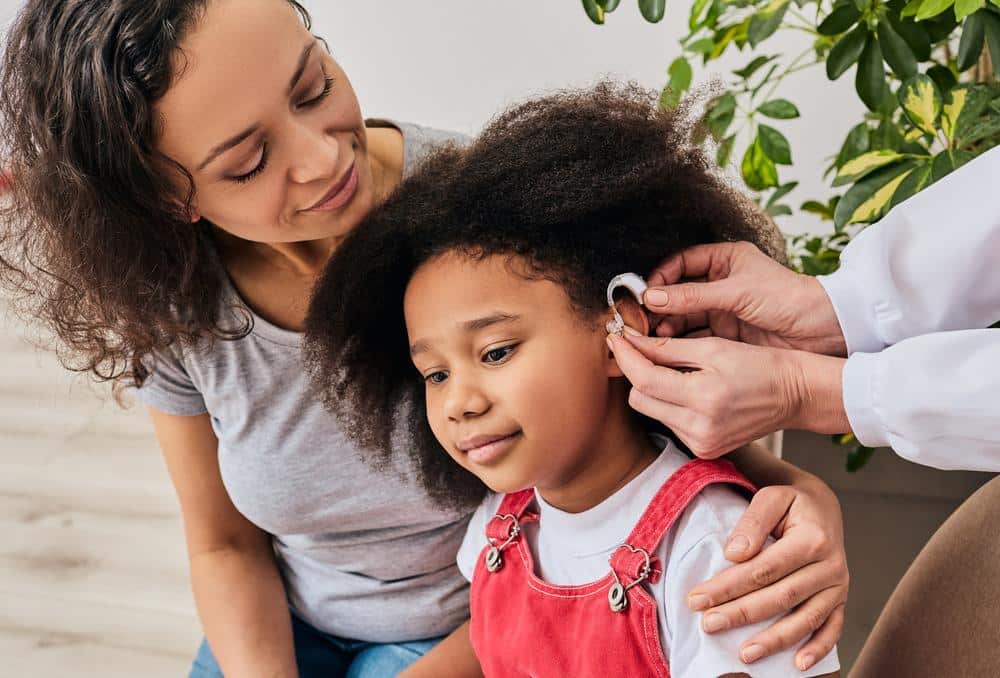
Permanent: Unfortunately, some children have sensorineural hearing loss (sometimes called nerve deafness), which is permanent. Most of these children have some usable hearing, and children as young as three months of age can be fitted with hearing aids. Early diagnosis, early fitting of hearing or other prosthetic aids, and an early start on special education programs can help maximize a child’s existing hearing. This means your child will get a head start on speech and language development.
Sudden: Abrupt loss of hearing in one or both ears is an urgent concern that requires immediate evaluation and management from our team.
Noise Induced: When a child or adult is exposed to harmful sounds (e.g., sounds that are too loud for too long a time) sensitive structures of the inner ear can be damaged causing noise-induced hearing loss (NIHL). NIHL is a hearing disorder characterized by a gradual, progressive loss of high-frequency hearing sensitivity over time as a result of exposure to excessive noise levels. According to the National Institute on Deafness and Other Communication Disorders (NIDCD):
Prevention of Pediatric Hearing Loss
Not all hearing disorders in children can be prevented—however, they are some steps you can take to reduce your child’s risk. Pediatric hearing loss prevention tips include:
Pediatric Hearing Loss Evaluation and Diagnosis
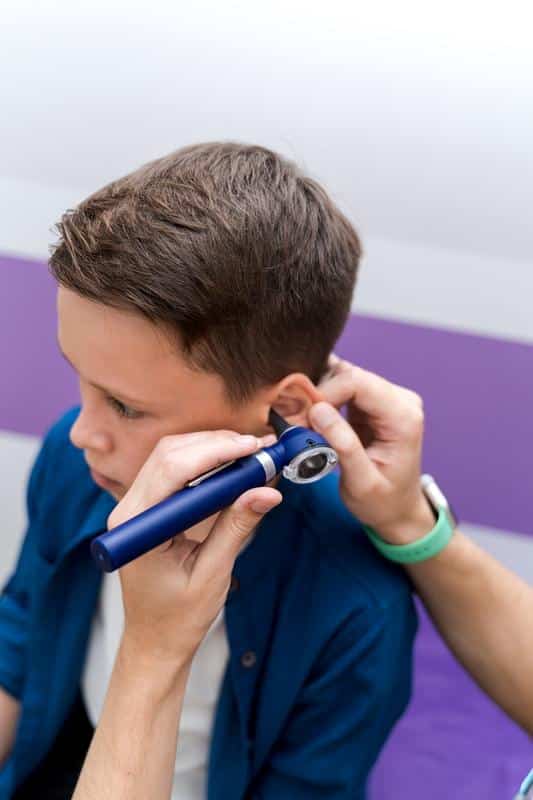
Our audiologists will conduct a thorough evaluation to identify potentially treatable causes and attempt to restore lost hearing function. Facets of a hearing evaluation include reviewing medical history and:
If a CT scan is necessary, we often will use the MiniCAT scanner. The MiniCAT scanner emits much lower doses of radiation while producing quality images, making it very child-friendly.
Pediatric Hearing Loss Treatment
Treatment varies based on the degree of hearing loss and its root cause. However, some common treatment options include:
If our team finds evidence of a hearing disorder in your child, they will work with you to develop a customized treatment and management plan, and help to educate you so that you fully understand your child’s pediatric hearing loss condition.
Help Your Child Hear Clearly and Thrive with ENT Care in Richmond, VA
Hearing loss can affect every part of your child’s growth, from speech and language development to confidence and learning, but early intervention can make all the difference. Our pediatric ENT specialists work closely with families to create personalized treatment plans that support long-term hearing health and development.
Call us today at (804) 484-3700 to schedule a hearing evaluation and give your child the gift of better hearing and brighter communication.