Ear tubes are tiny, hollow cylinders placed inside the eardrum. The tubes are most often recommended for children who have chronic middle ear infections, but they can also be helpful for adults.
The Dual Purpose of Ear Tubes
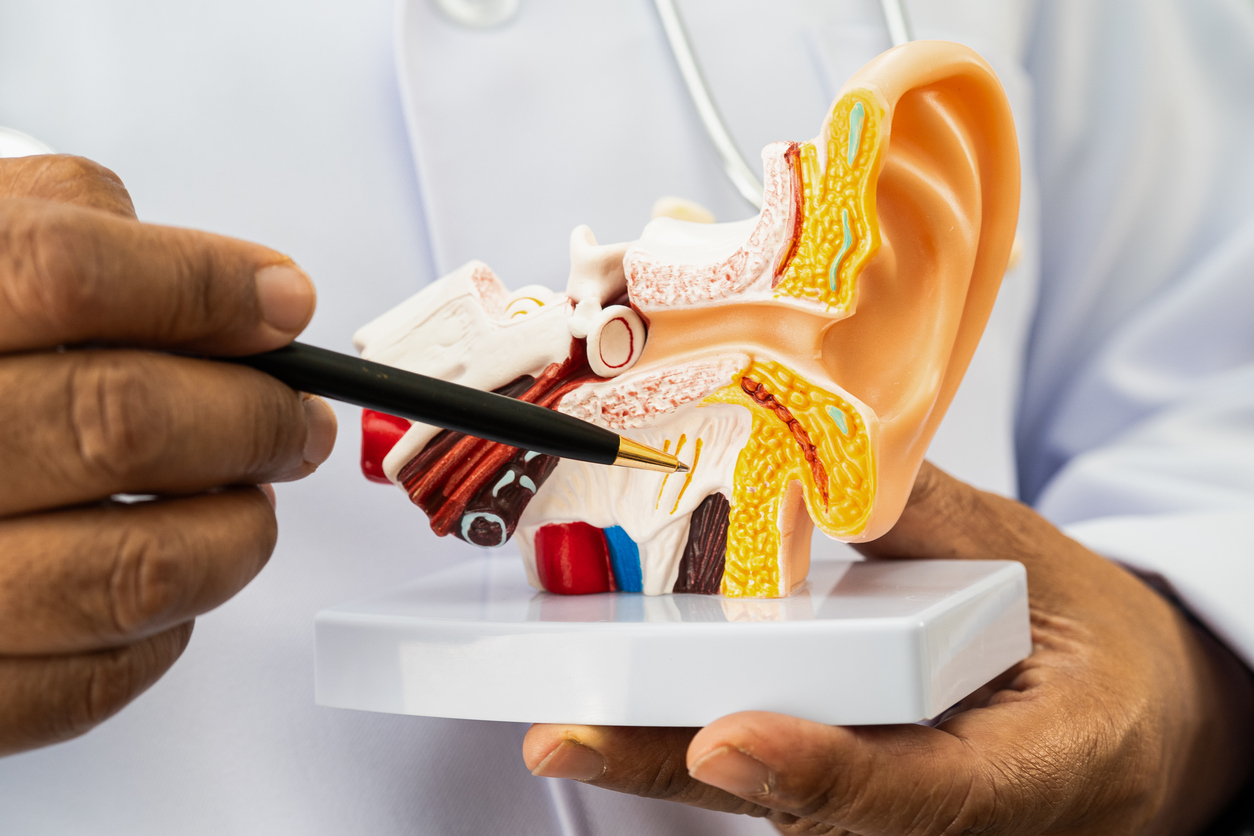
There are two main purposes for ear tubes:
- Draining fluid. Ear infections cause fluid to build up in the middle ear. In many cases, the fluid will drain on its own. However, children have smaller Eustachian tubes, which cannot drain fluid as effectively as the larger Eustachian tubes in adults. The implanted ear tubes promote easier drainage. They can also be helpful for adult ear infections, but adult tubes are more commonly used for another purpose.
- Ear barotrauma. Ear barotrauma is the most common reason for ear tube placement in adults. Ear barotrauma occurs when air pressure changes drastically, such as when a plane is taking off or landing. Normally, the Eustachian tubes balance pressure, but sudden changes can make it difficult for them to keep up. Just like the implanted tubes can drain fluid from the ear, they can allow air inside the ear to help the pressure equalize.
Mild ear infections and ear barotrauma typically resolve on their own; ear infections in a few days and ear barotrauma shortly after the air pressure returns to normal (such as when stepping off a plane). Unfortunately, more severe cases of either condition may need intervention with ear tubes.
Severe pain or other long-lasting symptoms usually warrant a trip to Virginia Ear, Nose & Throat for an ear exam.
Placing and Removing Ear Tubes
Ear tubes are placed under general or local anesthesia. The surgeon will make a small incision into the eardrum, use suction to remove fluid if necessary and insert the ear tube.
Most ear tubes will fall out on their own in about nine to 18 months. If they haven’t fallen out within two years, we can remove them manually.
Schedule Your ENT Consultation
If you or your child is experiencing prolonged issues with ear infections or ear barotrauma, contact Virginia Ear, Nose & Throat to schedule an ear exam with one of our specialists. We’ll help you decide whether ear tubes are the best option for your symptoms.
Sources
Cleveland Clinic. (2020). Airplane ear: Symptoms, diagnosis, treatment & prevention. Cleveland Clinic. https://my.clevelandclinic.org/health/diseases/17929-airplane-ear